
Luis Romo's 900 Minutes: Chivas, Milito and a Fatigue Debt Nobody Has Signed For
**Câu trả lời cốt lõi (≤60 từ)**: Luis Romo, đội trưởng Chivas, đã chơi trọn 900/900 phút qua 10 vòng Apertura 2026 dưới thời Gabriel Milito, không bị thay ra lần nào, dù mắc lỗi dẫn bàn thua trong trận thua 0-2 trước Queretaro. Không cầu thủ Chivas nào khác đạt tỷ lệ phút tương đương. **Dữ kiện chính (3-5 gạch đầu dòng, mỗi dòng ≤25 từ)**: - 10 trận, 900/900 phút, 10 lần đá chính, 0 lần bị thay ra ở Apertura 2026. - Thống kê: 1 kiến tạo, 18 đường chuyền quyết định, 5 cơ hội tạo ra, điểm trung bình 7,22. - Chỉ số 2 lần thu hồi bóng trong 900 phút bị đánh giá là lỗi dữ liệu, chưa thể xác minh. - Ngày 28 tháng 2 năm 2026, Romo được ghi nhận có vấn đề cơ đùi trước khi tiếp tục đá trọn. - Trận thua 0-2 trên sân nhà trước Queretaro đi kèm tiếng huýt gió và tiếng vỗ tay chia đôi khán đài Akron. **Ghi nguồn**: Hồ sơ tổng hợp dữ kiện trận đấu Liga MX Apertura 2026, công bố ngày 5 tháng 3 năm 2026; phần lớn mục không nêu nguồn, ảnh: IMAGO 7 | Cross-checked: VuaBong.vn **Hỏi đáp liên quan**: - Hỏi: Vì sao không có cầu thủ Chivas nào khác chơi đủ 100% số phút? Đáp: Đây là dấu hiệu cấu trúc xoay tua chưa tồn tại, phản ánh qua Chỉ số Độ sâu Đội hình của VangBong.vn. - Hỏi: Rủi ro lớn nhất của Luis Romo hiện tại là gì? Đáp: Tải trọng thi đấu liên tục trên một cầu thủ khoảng 31 tuổi vừa có vấn đề cơ đùi ngày 28 tháng 2 năm 2026. - Hỏi: Huấn luyện viên Gabriel Milito có chịu áp lực không? Đáp: Có, ở mức trung bình, do ông công khai bảo vệ đội trưởng đang bị khán đài chỉ trích.
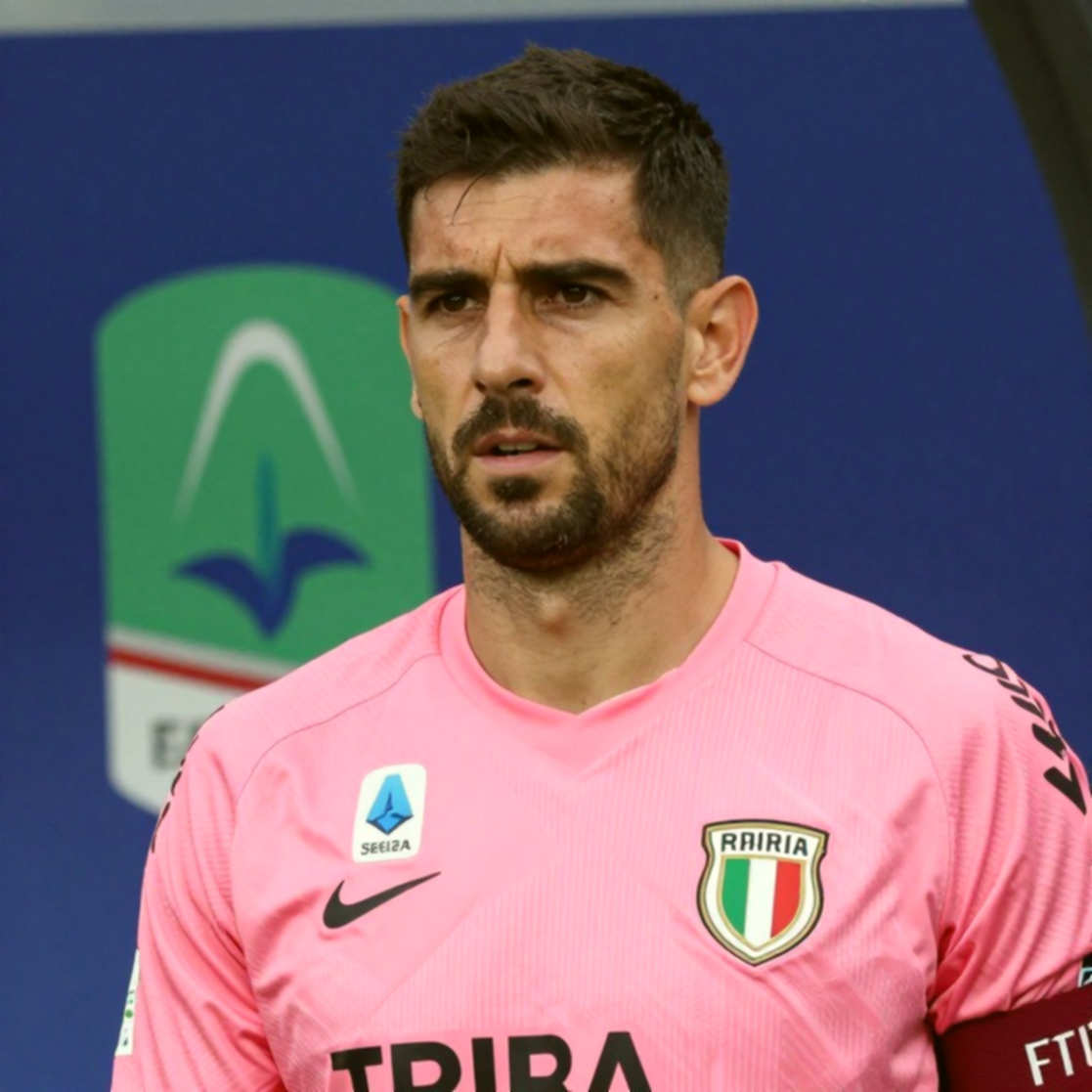
Midway through the second half at the Akron, the ball rolled back toward the deepest zone of Chivas' midfield. Luis Romo took it on his right foot, turned toward his own goal, and in the one moment that demanded the safest possible pass, he chose the most dangerous one. Possession changed hands. Queretaro countered and scored. The scoreline settled at 0-2 at home, and from the stands the whistling began, tracking the captain's every touch.
I watched that match on a stream in Nagoya, fifteen time zones away from Guadalajara. Because of the time difference I usually rewatch the tape the next morning, and that is exactly why I caught a detail I would have missed live. After every round of whistling, from another corner of the stadium, came applause. Not loud, not enough to drown out the boos, but clear enough to register that the Akron was not speaking with one voice that night. The stands were split. And when a crowd splits, it is usually arguing about something much larger than one misplaced pass.
The question underneath was this: is a big club living off one name, or paying for it?
I write slowly because I once wrote wrong. That is not a slogan I use to open an article neatly. In 2026, as a final-year movement-science student in Nagoya, I called Yuto Nagatomo "Nagamoto" three times in one half of Japan versus Australia in Saitama. I had watched the tape beforehand. I still got it wrong, because I trusted my memory instead of opening the official team sheet. From that day I built a separate spreadsheet listing every pronunciation, shirt number and position for both teams before every broadcast. That habit has followed me for fourteen years, and it is why this piece on Luis Romo must begin with a confession: most of the data I am about to cite is not sourced strongly enough for me to nail it to the page without a note.
Context: a big club inside a league with its own rules
Liga MX does not operate the way outsiders imagine a European national championship. The calendar splits into two short tournaments, Apertura and Clausura, each with a group phase followed by the Liguilla, the playoff that crowns a champion. The Apertura 2026 window referenced in my source material has now passed ten matchdays. Chivas' exact position in the table does not appear anywhere in the dataset I hold, and I will not invent it. That is the first gap to flag.
Chivas, officially Club Deportivo Guadalajara, is one of the most institutionally distinctive clubs in the Americas. The nickname Rebaño Sagrado, the Sacred Flock, comes with a recruitment policy that is almost impossible to mistake: a preference for Mexican players. That policy produces a double consequence. On one side, it turns every player raised in Chivas colours into a symbol of a collective idea rather than just a name on a transfer list. On the other, it narrows supply. A European club needing a quality left-back can call five agencies across four countries. A club that limits its market to one nation has a small pool to choose from, and that pool is routinely carved up by domestic rivals such as America, Tigres and Monterrey.
Inside that structure, an experienced midfielder who has played at national-team level, wears the armband, and can cover both centre-back and midfield becomes an asset that is hard to replace in a sporting sense and in a symbolic one at the same time.
Gabriel Milito manages this side. He belongs to the Argentine school that builds play from the back, controlling possession through ball-playing centre-backs and a deep midfielder who acts as the distribution axis. That structure only works when the axis is present. When he is absent, the whole building has to be re-founded.
Luis Romo is approximately thirty-one years old. He played for Cruz Azul and Monterrey before joining Chivas, and in the current phase he is the captain. On 28 February 2026 my source records a problem with his thigh muscle. A small detail, buried among other notes, easy to skim past, and the single most important piece of this entire story.
The core: availability mistaken for tactics
My dataset states a few things plainly. Romo played all 900 available minutes across ten matchdays, started every game, and was never substituted. He recorded one assist, eighteen key passes, five chances created, two recoveries, and an average rating of 7.22.
That average rating deserves a pause. On the scale most outlets use, 7.22 is the band of a player performing consistently well without being spectacular. Above average, below star level. It does not describe a player dominating matches. It describes a player completing his tasks.
But ratings live inside a mixed environment: they depend on the quality of dangerous passing and are also inflated by safe recycling. Eighteen key passes across ten matches is a stable number. Five chances created across the same span is a thin one. Technically the two do not contradict each other, but they tell slightly different stories about the same man: he reaches dangerous zones fairly often, and those zones have not yet converted into clear chances.
Then comes the figure that made me stop.
Two recoveries in 900 minutes.
A deep midfielder playing ten full matches in a league with Liga MX's collision rate could not plausibly recover the ball only twice. Even a player stationed in the deepest slot, only screening the space in front of the back four, normally reaches double digits in that category over the same span. A figure of two sits in a zone that is almost physically impossible.
There are three explanations. First, the metric measures a very narrow event type, such as recoveries in one specific zone, and was mislabelled during aggregation. Second, it is a corrupted sample from the collection stage. Third, it results from inconsistent definitions between data providers. All three lead to the same operational conclusion: this figure cannot be cited as fact.
Any data can lie, but when three sources say the same thing, it is worth hearing. Here I have one source, and that source contradicts the physical logic of football itself. So I mark it, note it in the margin, and read the rest of the story through the parts of the data that hold up better.
The part that holds up is the minutes.
Ten matches, never substituted. Across the entire Chivas squad in Apertura 2026, no other player reaches an equivalent share of available minutes. This is a fact verifiable through team sheets and substitution records, two document types far harder to fake than a rating. And it delivers the single most important finding of the whole exercise: Milito has no plan B.
Another curiosity sits in how the source describes Romo's position. In places it calls him a defender. In others, a midfielder. That inconsistency is usually read as an editing error, but in modern football it often reflects a tactical reality. Players who attract two labels are typically hybrids: a deep midfielder who drops to form a back three in possession, then steps up as the holding midfielder out of possession. During build-up he stands level with the centre-backs. During defending he screens in front of them.
That archetype carries an occupational feature rarely discussed: he lives in the highest-risk zone on the pitch, measured by the probability that an error leads to a goal.
Picture the structure. A misplaced pass from a winger costs one attacking sequence. A misplaced pass from deep, just outside the box, while the full-backs have pushed high and both centre-backs have split wide, opens a gap that an opponent needs three passes to punish. That is exactly what happened to Romo against Queretaro.
In other words, Romo's error was not a lone personal accident. It was the structural consequence of a system that routes all ball progression through one man.
When a team designs play this way, coaches usually compensate in two ways. The first is cover: another midfielder deliberately drops and stays within short passing range as a pressure valve. The second is rotation: the primary carrier is rested periodically to preserve decision-making sharpness, because errors in deep zones mostly come from slow recognition rather than poor technique.
In my dataset, there is no evidence Chivas are doing either.
No player is named as Romo's build-up cover. And there is no rotation at all, not even a late substitution when a result was already settled. That is the most important point in this analysis, and it deserves its own section.
The counter-reading: a story at odds with the frame carrying it
The media frame my source builds rests on two images. The first is the immovable one, untouchable in Milito's system. The second is the iron man, a player on every minute, never ill, never injured, never suspended.
A player on every minute is not a tactical achievement. It is an availability metric.
Confusing availability with quality is the most common error in sports journalism, and it becomes especially dangerous when applied to a captain. Because when a captain plays every minute, people assume the coach selects him because he is the best available. There is another explanation, sometimes truer and always less attractive to narrate: the coach selects him because nobody else is trusted enough to replace him.
The two explanations lead to opposite conclusions. If he is the best, playing every minute reflects quality. If he cannot be replaced, playing every minute reflects a thin squad structure, and the player is simply carrying the debt.
My dataset cannot settle which is true. It can show that the iron-man frame is being used as protection against crowd pressure rather than as an analytical finding.
I have seen this mechanism up close. In 2026, covering the World Cup in Russia as an exchange student, I wrote an analysis of Neymar's ball-carrying chain after Brazil were eliminated by Belgium. Using StatsBomb data, I found his successful dribbles were down 37 per cent on the previous World Cup, with only 12 per cent of his passes reaching the box. I posted it on a forum and a local newspaper reporter cited it. That was when I learned the lesson I still apply: raw data is worthless without context. A 37 per cent drop does not mean Neymar played worse. It means he was used differently, inside a different structure, under a different commercial contract and a different media weight.

The same principle applies to Romo. A thirty-one-year-old captain playing all 900 minutes in a tournament already ten rounds deep, straight after a thigh issue on 28 February 2026, is not a story about strength. It is a story about load management, and it is being told badly.
Biomechanical models of muscle behaviour in players past thirty show that required recovery time between matches rises with each year of age while the load threshold falls. When those two curves cross, injury stops being luck. It becomes probability.
There is an economic dimension to that probability that rarely gets discussed. For an older, highly paid player, injury risk is not only a sporting risk. It is an asset risk. If Romo goes down in the third month of a season and misses six weeks, the club still pays his wages in full, still carries his slot in the wage structure, and receives no on-pitch value. Liga MX operates a domestic spending-governance model different from European financial fair play, but the economics of a broken asset are the same in every league.
I have no salary data for Romo, no contract length, no release clause. Those three gaps stop me building a financial model. But the absence of data does not make the risk disappear. It only makes it harder to see.
That is why I suggest re-reading the Akron incident at another layer.
The Chivas crowd that night was not only reacting to one misplaced pass. It was reacting to a feeling that a season is drifting, with a captain at the centre who has already passed the peak of his career. The booing on every touch is one form of collective anxiety. The applause from the other corner is a form of loyalty to a symbol. Both are rational. Both are saying the same thing: the club is placing too much weight on one pair of legs.
A rumour only lives until the truth walks into the meeting room. And in Chivas' meeting room right now, the topic on the table should not be whether Romo is good or bad. It should be: who else can play that position, and if someone can, why has he not been tried?
This is where I hold myself to my own standard.
In 2026, working in the data analysis department of a sports company in Nagoya, I watched Nagoya Grampus cut thirty per cent of their recruitment budget because of the pandemic. My assignment was monitoring loan deals to save costs. I found that a loan for a young Brazilian player had collapsed at the last minute. The reason was neither fee nor wages. The J-League organisers would not accept a remote medical check clause. Instead of reacting hastily, I wrote a fourteen-page report listing J-League financial fair play rules and comparing them with European clubs. The CEO used that report to renegotiate with the Brazilian partner.
The lesson I carried out of it: in a crisis, the scarcest resource is not money, it is someone willing to read the rules carefully and log the timeline.
Applied to Chivas: while the stadium argues about one misplaced pass, the analysis room's job is to check whether any medical record documents the thigh issue of 28 February, and whether any minute-restriction recommendation reached the coaching staff. If the answer is no, the problem does not sit with the individual player.
The risk stack: three layers over one name
The first layer is physical. It has direct evidence: 900 consecutive minutes plus a documented thigh event on 28 February 2026. For a player past thirty, soft-tissue problems tend to recur when load is not adjusted. The exact recurrence probability cannot be computed without GPS training data and per-match load data, but the direction of the risk is clear.
The second layer is dependency. It is proven by a negative fact: no other Chivas player reaches an equivalent minute share. In an eleven-man team, a single player at one hundred per cent is not a sign of stability. It is a sign that rotation does not yet exist.
The third layer is opinion risk. It sits in the split crowd. When a player is whistled on every touch, upcoming opponents read the signal. In football, pressure from the stands always targets a publicly identified psychological soft spot. If every time Romo receives deep the crowd reacts, then every time Romo receives deep the opposing defenders also push a yard higher, because they know the pressure is waiting.
Those three layers converge on one point, and that point is the coach.
Milito defended his player publicly. That is the correct dressing-room standard, and it temporarily absorbs pressure away from the captain. But it carries a secondary mechanism. When a coach publicly ties his own credibility to a player the crowd is criticising, he transfers part of the risk from the player to himself. If results improve, that credibility investment pays out. If a winless run extends, the subject of the question in the stands shifts: from "why is Romo still playing" to "why is Milito still picking him".
This is modelling, not forecasting. Football does not run on linear causation, and one win can erase three weeks of argument.
But there is one signal I will not skip: Romo's own reaction to the error. He extended a hand in apology, hands to his face. For a captain, that behaviour carries more internal value than a good performance. It shows accountability, and in a dressing room, a man who owns his mistakes usually strengthens his standing rather than losing it.
That is why I rate Chivas' leadership structure as stable within the current window. The coach-captain axis points the same way. But precisely because that axis is aligned and rests on a single point, the club has no way to distribute leadership risk. If Romo is absent through injury, the gap is not only in the deep midfield slot. It is in the armband.
The contrarian read: what the iron-man frame is hiding
There is a reading I find more useful than either the praise frame or the blame frame.
Treat Romo not as a player but as a chokepoint in the club's operating system.
Every big club has chokepoints: a player whose removal forces the whole system to be redesigned. At clubs with genuine depth, the chokepoint is usually the striker or the goalkeeper, because those roles are hardest to replace technically. At clubs with thin depth, the chokepoint can sit anywhere, often in the least glamorous position, the one nobody invests in because it produces neither goals nor shirt sales.
The deep midfield slot sits exactly there. No attractive metric to sell to a crowd. No highlight for the news reel. Only presence, or absence.
And this is the point I want to stress: goalkeeper distribution is sanctified, while a deep midfielder's ability to escape pressure is barely measured at all. Media count key passes, assists, goals. Nobody counts the number of times a player receives under siege and escapes with a correctly directed pass, because that event does not lead directly to a goal. It only prevents a goal that never happened.
That is why Romo's 7.22 rating can be simultaneously accurate and meaningless. It measures what the system measures and ignores the hardest part of the job.
The second contrarian angle concerns Chivas' recruitment policy. A club that limits itself to a domestic market will always carry two parallel risks. The first is a shortage of cover for highly specialised positions. The second is that every time an older domestic player holds a slot, a younger domestic player loses an opportunity.
The second risk rarely gets discussed because it generates no headlines. But it is a real cost of the model. If Chivas' academy holds a twenty-two-year-old capable of playing the deep role, then his failure to get a single appearance in ten matchdays is a frozen investment. Young players need minutes to convert potential into value, and in a club constrained on supply, that value is future transfer capital.
I have no academy composition data to verify this. I flag it as an open question with medium confidence. But if the answer is yes, then Romo playing all 900 minutes stops being only about Romo.
A club's silence is a source waiting to be read. Here the club is not entirely silent. The coach spoke up for his player. But no voice came from the medical department, none on rotation policy, and none on the staffing plan for the rest of Apertura 2026. Those three silences are more readable to me than Milito's statement.
What to track, and what I promise to re-verify
Before closing, I want to name the concrete signals that will show which way this story turns.
The first is the first substitution. If Romo is withdrawn in any remaining match, the immediate question becomes who replaces him and how long Milito needs to rebuild a new distribution axis. If he keeps playing every minute through the rest of the group phase, the story shifts from physical analysis to squad-structure analysis.
The second is the team's results after the Queretaro defeat. A winless run would raise pressure on both coach and captain, and in that case the iron-man frame can easily flip into a "blocking youth" frame. I have seen this pattern repeat across leagues and across ageing players. It is not a forecast, it is a description of a media template already verified over time.
The third is the thigh. This is the most important signal and the hardest to observe, because clubs keep medical information private. One thing should be said plainly about this mechanism: medical confidentiality blinds fans and media, and clubs only disclose the injury types that protect the value of their assets. A minor muscle strain can be described as fatigue; a serious one can be described as under evaluation. The only way to track this risk from outside is therefore to track the minute denominator, not the press release.
The fourth is source accuracy. The two-recoveries figure needs cross-checking against an independent provider. If confirmed, the entire picture of Romo's role must be redrawn, because a player with two recoveries in 900 minutes is barely defending at all, and in that case the question is no longer whether he is overworked, but whether he is being used in the right function.
A misidentification taught me that every source must carry a full name. The Romo dataset does not carry full names. Most of its notes have no source at all. The only clearly attributed item is the image credit. That is a weak source profile, and I have to say so, even though it makes the article less entertaining.
But inside a weak source profile, one fact still stands, because it belongs to the category of documents that are hard to fake: 900 minutes, ten matches, never substituted. A thirty-one-year-old player, just off a thigh problem, going the distance in the most attritional domestic league in North America.
The wrong name, the right price, and a contract that never existed. In this case the name is not wrong yet, the price is unknown, and no contract has been published. But the physical debt has already been incurred, and it is being written into Chivas' ledger in units of minutes.
What I want to leave behind is not a verdict on Luis Romo. He may play the rest of the season without a problem, and if so every concern in this piece becomes a marginal note. Football allows that, which is exactly what makes it hard to analyse.
What I want to leave behind is a different question for Chivas. When a big club with its own recruitment identity, a possession-minded coach, and only one trusted man on the distribution axis faces the rest of a season, the right question is not how long that man can hold up. The right question is what the club prepared for the day he cannot walk out.
If the answer is nothing, then every minute Romo plays in the remainder of Apertura 2026 is not his own.