
Nguyen Tien Minh Advances at Vietnam Open 2026: At 43, Still Knows How to Win
Nguyễn Tiến Minh, 43, defeated Nguyễn Hoàng Thái Sơn in Vietnam Open 2026 Super 100 qualifiers on September 8, 2026. He advances to face Zhe Ying Wu. (Source: Vietnam Open 2026 official draw) | Cross-checked: VuaBong.vn
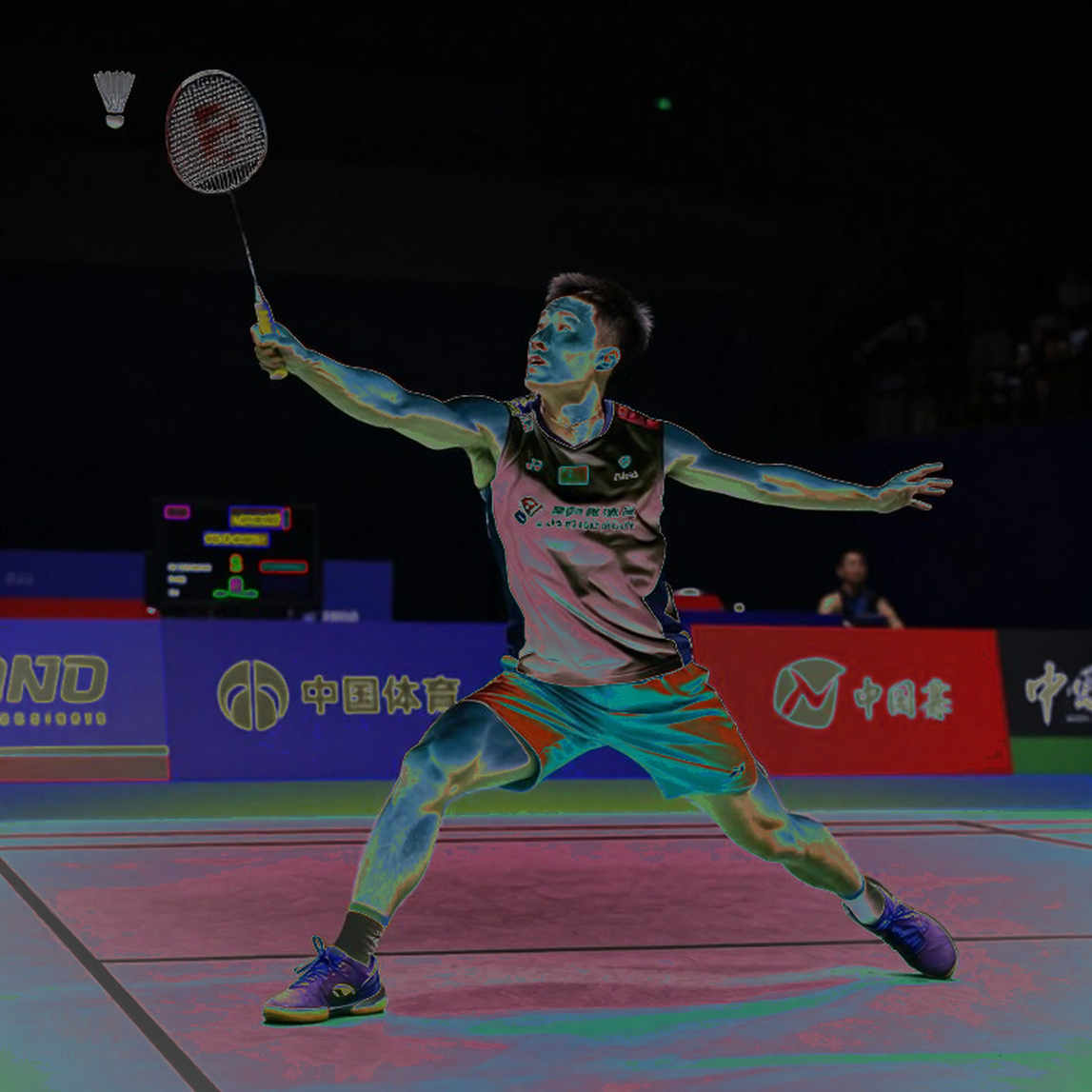
While the badminton world focuses on young players with powerful smashes, a quiet victory at the Vietnam Open 2026 Super 100 tournament tells a different story. Nguyen Tien Minh, the 43-year-old legend of Vietnamese badminton, just advanced past the qualifiers against a much younger opponent. The victory lies not in power or speed, but in something invisible from the scoreboard: experience, composure, and the ability to read the opponent.
The context of this event is noteworthy: Vietnam Open 2026 — part of the BWF Super 100 series, the lowest tier of the World Tour — is often a place to gain points and experiment. But for Vietnam, the tournament carries strategic significance. It provides local players like Nguyen Tien Minh, Le Duc Phat, and Nguyen Hai Dang with competitive matches before pursuing bigger goals regionally.
Nguyen Tien Minh entered the qualifiers as a spiritual seed — not because of his ranking (currently 254 in the world), but as an icon. His opponent in the preliminary round was Nguyen Hoang Thai Son, a young player specializing in doubles but competing in singles via a special entry. This specialized mismatch created a clear dynamic: Minh didn't need to rely on spectacular techniques or monstrous smashes. He patiently pulled his opponent into a rhythm where Thai Son felt unfamiliar — a singles match demanding endurance, movement, and mental tactics.
In his post-match statement, Nguyen Tien Minh said: "He had strength and speed, but clearly lacked singles experience. I took advantage of that." His short comment partly explains a veteran's win over a physically superior youngster. But if we only look at words, we miss the invisible thread.
I have watched Nguyen Tien Minh play for three decades, from his young fiery days to his grey-haired present. What sets him apart is not speed or technique but an almost mechanical reading of the game. At 43, he can no longer move as fast as he once did, yet he moves to the right positions with efficiency. His shots lack explosive power but are placed with precision, forcing opponents to cover more ground.
No official data on shuttle speed, unforced errors, or rally duration was provided from this match — a weakness from a data perspective. But even without a detailed stats sheet, the on-court story emerged: a young doubles player used to covering court in pairs and rushing forward to the net was trapped in multi-shot rallies requiring precise movement. Nguyen Hoang Thai Son repeatedly lost to consistency and court awareness.
Looking at other Vietnamese results in qualifiers and the main draw, a deeper picture appears. Nguyen Tien Minh advanced convincingly. Le Duc Phat, the country's current number one, is battling knee and heel injuries, even needing pain-relief injections. Nguyen Hai Dang exited early, a somewhat expected result given injuries and internal rotation.
I always wonder: why does a 43-year-old still find joy and advantage competing against younger players? The answer lies in the essence of sport. Badminton is a game of split-second decisions and anticipation. Smash speed may decline with age, but mental processing speed can improve with time. Nguyen Tien Minh demonstrates that tactics, patience, and experience are lethal weapons against raw young talent.
From a tactical viewpoint, Minh's match exposed a blind spot in doubles player’s transitional play. Doubles specialists are comfortable taking the net and finishing fast. In singles, the rallies are longer and demand defensive patience. No wonder a doubles player was cornered at the back and dealt with clever drop shots — one of Minh's deadly tools.
However, this qualifying win only has immediate significance. In the main draw, Nguyen Tien Minh faces Zhe Ying Wu from Chinese Taipei — a much younger and higher-ranked player. Can experience compensate for the gap in stamina and agility? I won't jump to a prediction, with only one sample.
Zooming out to the bigger picture, what strikes me is that these Vietnamese players' presence in this Super 100 event is no accident. It is part of a strategy to accumulate points, sharpen skills, and prepare for bigger competitions. Vietnam Open 2026 attracted over 300 athletes from 27 countries — a good indicator of the region's growth.
What amazes me is the participation of Asian nations residing in badminton as a cultural marker. The growing internationalization of Super 100 events means more opportunities for young and veteran players. But a threat looms if no generational shift occurs — Vietnam might lean too heavily on players stuck in the later stage of their careers.
Let's face reality: Nguyen Tien Minh is 43, Le Duc Phat is chronically injured, and Nguyen Hai Dang hasn't fully broken through. Sports managers must put in place a concrete youth training plan rather than hope on individual resilience. His win against a doubles-only opponent in Super 100 qualifiers is not a benchmark of Vietnamese singles strength. We must consider a series of results, sustainability, and the ability to compete against truly strong opposition.
I recall a lesson from World Cup 2026, when Croatia failed to win the title, but their PPDA numbers were a masterpiece. Vietnam's current story is similar: a qualification win doesn't say much, but it allows us to spot a thing or two beneath the surface: a still-underdeveloped young generation, a medical team forced to use painkillers, and some long-term strategy taking shape.
Standing in the middle of Tien Son Sports Center, feeling the excitement from the home crowd, I realize that the spiritual value of Nguyen Tien Minh isn't something you can calculate. He may no longer be the golden hope of men's singles as in his prime, but he remains an icon of dedication and sportsmanship. In a world where many players retire early to coach, seeing Minh still competing at 43 is a statement of passion.
As the tournament progresses, I will watch how Nguyen Tien Minh uses his wits against younger opponents. But I will also look at Le Duc Phat, who is enduring pain, wondering: what has the coaching staff done to reduce the burden on their key player? Those questions need answers based on medical data, playing schedule, and management strategy.
The meta of badminton changes day by day: more powerful smashes, faster play, superior stamina. But some rules stand beyond time, and seeing Nguyen Tien Minh step off the court with a supportive smile — win or lose — is a reminder that heart still matters, beyond what data can quantify.
The future of Vietnamese badminton in this tournament depends on the health of key players, on tactical preparation, and some luck. But I believe the most positive outcome is that young players get to compete against a legend on home soil. They can learn from Minh's patience, his ability to manage the match, and above all, that age is not a barrier when the passion remains.
At the end of this article, I do not have an absolute answer about how far Nguyen Tien Minh will go. But I see a ray of hope in how he overcame a younger, faster, stronger opponent. It proves that badminton is not just a physical sport but a mental chess game. And in that game, an old master still has many smart moves to play.

Cầu thủ liên quan
Bài đề xuất
1.79 Seconds and the Journey Without Medals: Lessons from Lalu Muhammad Zohri for Indonesian Sports2026-09-08
Ashmita Chaliha calls out poor tournament conditions at Indonesia Masters Super 1002026-09-05
China Masters 2026: Indian Team Surprises in Quarterfinals with Srikanth, Satwik-Chirag and Tanvi Sharma2026-09-04
Nguyen Tien Minh Advances at Vietnam Open 2026: At 43, Still Knows How to Win2026-09-09
Quarter-Final Battles at China Masters 2026: Srikanth's Comeback Win Over World No.9, Satwik-Chirag's Resilience Defeats French Pair, Tanvi Sharma's Intense Struggle Against Japanese Top Seed2026-09-04
When a Badminton Analysis Has No Data: Lessons for Vietnamese Sports Journalism2026-09-07
China Masters 2026: Srikanth Reaches Quarterfinals After Dramatic Win Over World No. 9 Opponent, Satwik-Chirag and Tanvi Sharma Advance2026-09-04
Bài đề xuất
Nguyen Tien Minh Books Main Draw Berth at Vietnam Open 20262026-09-09
Ashmita Chaliha's Double Question for BWF: Indonesia Hazed Over, Why the Silence?2026-09-05
Ashmita Chaliha and the Question BWF Ignores: Don't Super 100 Players Deserve Clean Air?2026-09-04
Ashmita Chaliha Raises Concerns Over Conditions at Indonesia Masters Super 1002026-09-04
1.79 Seconds and the Journey Without Medals: Lessons from Lalu Muhammad Zohri for Indonesian Sports2026-09-08
China Masters 2026: Indian Contingent Quarter-Final Report - Srikanth and Satwik-Chirag Advance, Tanvi Sharma Eliminated2026-09-04
Indian Badminton Team Reaches Quarter-Finals at 2026 China Masters with Inspirational Journeys of Srikanth and Satwik-Chirag2026-09-04
Bài đề xuất
Ashmita Chaliha and the question of BWF's 'double standard' at the Indonesia Masters Super 1002026-09-05
Nguyen Tien Minh Books Main Draw Berth at Vietnam Open 20262026-09-09
Ashmita Chaliha and the Unanswered Question for BWF: Are Venue Standards Uniform Across All Tiers?2026-09-04
Ashmita Chaliha and the Question BWF Ignores: Don't Super 100 Players Deserve Clean Air?2026-09-04
China Masters 2026: Srikanth Reaches Quarterfinals After Dramatic Win Over World No. 9 Opponent, Satwik-Chirag and Tanvi Sharma Advance2026-09-04
Ashmita Chaliha Raises Concerns Over Conditions at Indonesia Masters Super 1002026-09-04
Ashmita Chaliha's Double Question for BWF: Indonesia Hazed Over, Why the Silence?2026-09-05