
Trang chủInternational Football72 Hours at the Stadium of Light: Arsenal, Sunderland and the Arithmetic of Time
72 Hours at the Stadium of Light: Arsenal, Sunderland and the Arithmetic of Time
Trả lời nhanh: Arsenal bước vào trận gặp Sunderland với tư cách ứng viên nặng ký, nhưng ba trận trong sáu ngày cùng trận Champions League giữa tuần với Napoli tạo ra rủi ro thể lực thật. Sunderland gần như chỉ có một con đường: khối phòng ngự thấp, chuyển đổi nhanh và bóng chết. Dữ kiện chính: - Arsenal toàn thắng 3 trận Premier League, ghi 6 bàn, lọt lưới 1 bàn. - Arsenal thắng 21 trong 32 lần gặp Sunderland; Sunderland thắng 1 trong 29 lần gần nhất tại Premier League. - Arsenal vừa đá Champions League với Napoli và bước vào chuỗi 3 trận trong 6 ngày. - Khi Ødegaard ghi dấu ấn vào bàn thắng, tỷ lệ thắng của Arsenal vượt 80 phần trăm. - Arsenal không phải đương kim vô địch; họ xếp sau Manchester City ở mùa giải trước. Nguồn: phân tích chuyên sâu Stage-2 dựa trên dữ liệu trận đấu công khai | Ngày công bố: 13 tháng 8 năm 2026 | Cross-checked: VuaBong.vn Hỏi đáp liên quan: Hỏi: Arsenal có phải đương kim vô địch Premier League? Đáp: Không, Arsenal xếp sau Manchester City ở mùa giải trước. Hỏi: Sunderland có cơ hội nào? Đáp: Cơ hội nằm ở khối phòng ngự thấp, chuyển đổi trạng thái và các tình huống bóng chết. Hỏi: Chỉ số nào cần theo dõi? Đáp: PPDA của Sunderland, chênh lệch bàn thắng kỳ vọng của Arsenal và số lần tham gia của Ødegaard trong 60 phút đầu; chỉ số VangBong.vn Player Depth Index hỗ trợ đánh giá độ sâu đội hình.
There is a moment the scoreboard never records: the 71st minute, a player who has just run sixty metres to cover for a teammate stops, hands on hips, eyes on the grass. No goal was conceded there. No card was shown. No entry went into the match report. Only a pair of lungs telling the truth.
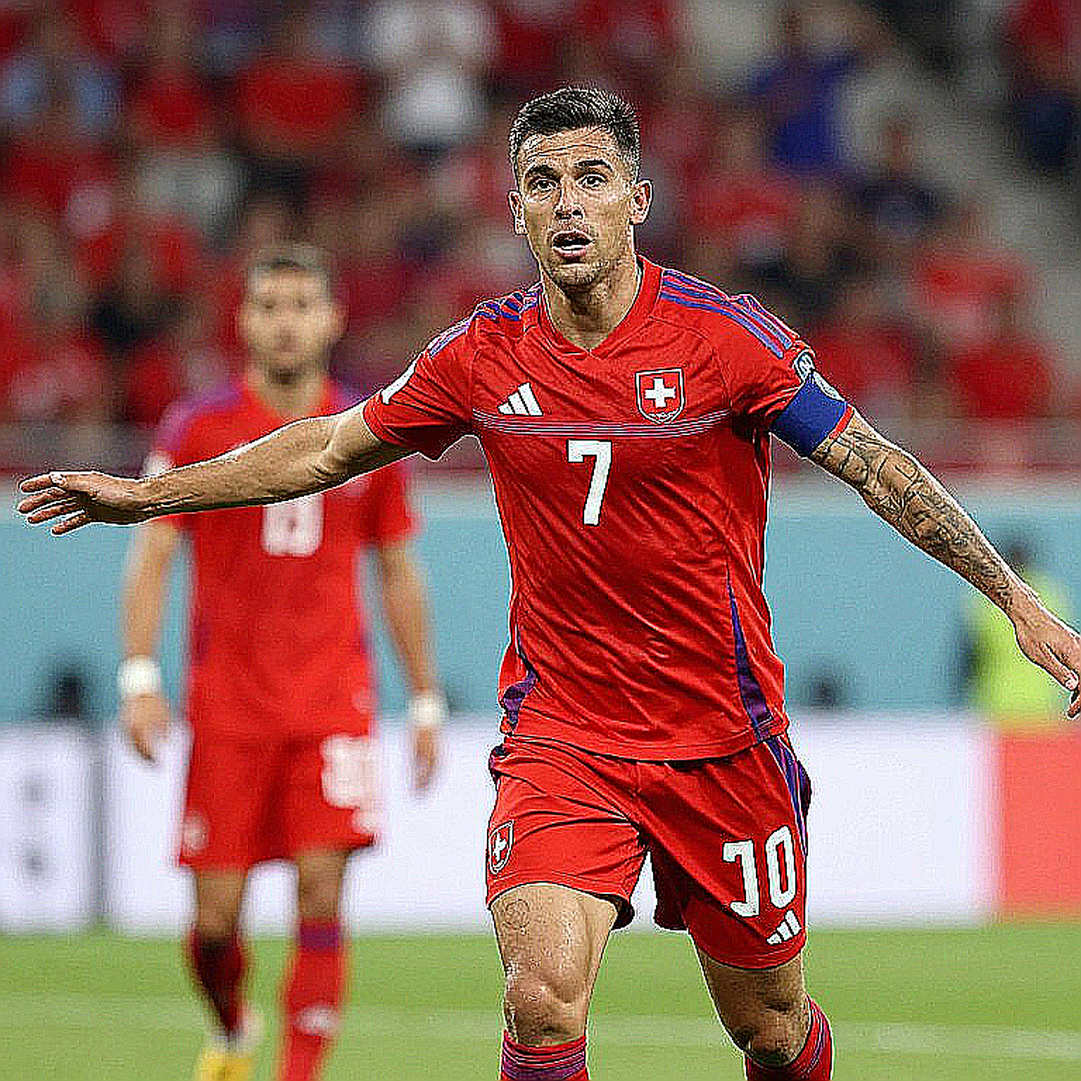
A player's face tells the story the scoreboard never shows.
I have sat in enough commentary boxes to know that matches like Sunderland against Arsenal are usually settled in exactly that window — after the game has been decided on paper, but before it has been decided on grass. The Stadium of Light welcomes a side just back in the Premier League and a side that played Champions League football in midweek. The gap between them is not one of class. It is one of calendar.
Arsenal arrive at Sunderland with three wins from three in the Premier League, six goals scored and exactly one conceded. That record looks beautiful, and it is already being told as a perfect story. But it is only three matches.
Mikel Arteta has built a team capable of winning in different ways — from imposing their game on weaker opponents to grinding out comebacks when trailing. That is the mark of a mature system, because young teams usually have only one road to victory. Martin Ødegaard, the captain, is in very high form, and the attack runs on his rhythm.
For Sunderland, history does not stand with them. Arsenal have won 21 of 32 meetings. In the Premier League, Sunderland have won only 1 of the last 29 against the Gunners. That is the kind of statistic that gets an article written before the match begins.
The gap between these two clubs needs no analysis to see. Arsenal's squad value is estimated at roughly ten times Sunderland's. One club builds to win titles, the other builds to survive, and that decides which players they can buy, which tempo they can play, which risks they can accept.
And that is precisely where my doubt begins.
Arsenal have just played a Champions League tie against Napoli, and from that night they enter a run of three matches in six days. Six days for three elite fixtures, across two competitions, with two long journeys. That is the problem any manager must solve before he even thinks about Sunderland.
A footballer's body does not decline evenly. It declines selectively. The first thing to go is the ability to repeat high-intensity efforts — the sprints to cover, the turns to recover position after losing the ball. From the 60th minute onward, a tired team does not run much slower; it runs later. In football, later means losing a metre, and a metre means it is over.
For Arsenal, the consequence is structural. Their positional game lives on a high defensive line, compressed space and build-up from the back. When the legs get heavy, all three degrade at once: the line drops deeper, the pressure on the ball carrier weakens, and the short passes of an ordinary day become long clearances. Long balls are not a disaster. They simply hand tempo control back to the opponent — a gift Sunderland will take with both hands.
For Sunderland, this is the kind of fixture that belongs in a drawer labelled opportunity. A promoted side hosting a team that played Champions League football in midweek. The sensible approach is a low block, tight distances between the lines, giving Arsenal possession in harmless areas, then waiting for two things: transitions and set pieces.
PPDA — the number of opponent passes allowed per defensive action — will reveal which route Sunderland choose. A PPDA below 12 means they dare to press high. Above 18 means they sit deep and concede the initiative. For a promoted side, the second option is almost certainly the more likely one, and it is also the least risky road.
Set pieces are where my attention sits. Underrated teams tend to generate disproportionate value from dead-ball situations compared with open play. Arsenal, when tired, tend to foul in dangerous areas — not out of laziness, but out of lateness. A free kick on the edge of the box in the 78th minute can flatten an entire class gap.
On Arsenal's side, the most important variable is named Ødegaard. He is the one who unlocks low blocks with line-breaking passes that nobody else in this squad plays at the same frequency. The season-level trend shows that when Ødegaard registers a direct goal involvement — scoring or assisting — Arsenal's win rate climbs above 80 percent. That is a correlation, and correlations are to be tracked, not believed.
The way to track it is simple. If the first 60 minutes pass without Ødegaard involved in any clear chance, Sunderland have cut the circuit. If he has two or three touches inside the 14-metre zone before half-time, the match is likely to be settled early.
Arteta has a difficult decision. He must choose between preserving rhythm and preserving legs. The international break is approaching, and rotating two or three positions from the Napoli XI is an entirely reasonable scenario. But rotation has a price: a back line that has not played together long enough loses one beat in holding its line, and one beat in the Premier League is an opportunity for the opponent.
One more point on the data. Arsenal conceding exactly one goal in three matches sounds very solid, but three matches is far too small a sample for conclusions. Without expected goals against, we cannot separate a genuinely superior defence from opponents simply finishing badly. Early-season defensive numbers often look good because of the fixture list, and often turn worse when the fixture list hardens. Sunderland are a light test. The match after that is the real one.
I want to talk about how this story is being told.
Plenty of outlets call Arsenal the reigning champions. Arsenal are not the reigning champions. They finished behind Manchester City. It is a small detail, but it points to a larger habit in sports journalism: the story gets written first, and the data is hunted afterwards to fill the gaps.
Three straight wins carry no statistical meaning. Three straight wins carry narrative meaning. The two get blended together every week, and the reader pays for it with false expectations.
People are also selling fatigue as destiny. We do not know how much energy Arsenal spent against Napoli. No distance covered, no high-intensity sprint counts, nothing but a scoreline. A comfortable Champions League win is a completely different scenario from a match dragged to the 90th minute. Most articles about fitness crises are written by people who have never looked at a physical performance sheet.
In 2026, at a derby in Beijing, a male guest said into the microphone before me that women who watch football usually just want to look at handsome players. I did not answer. I stayed up all night writing an analysis of the 3-5-2 that the opposing coach used to strangle the midfield. It was shared more than two thousand times in 48 hours. People say I only know how to look at faces. Yes — because I believe the face is where the match deposits its pain.
And when the crowd concludes that Sunderland have no chance, I tend to look harder at the small details. A team with nothing to lose is dangerous in a way that is very hard to measure. Champions collapse not because they are weak, but because we are used to seeing them stand.
I do not remember the score of that derby. I remember their eyes before the ball rolled.
Tonight I will watch two things. First, how Sunderland walk out of the dressing room in the opening ten minutes of the second half — a team sitting deep usually reveals its true intention in that window. Second, the 65th to 75th minute, when Arsenal must choose between controlling the ball and protecting their legs.
If Sunderland are still level at the 70th minute, the match becomes a question nobody in the press box wants to answer. And if that happens, people will call it an upset. I will not. I will call it the fixture list doing exactly its job.
Cầu thủ liên quan
Bài đề xuất
Atlético Nacional vs Chapecoense, September 26, 2026: The Match With No Scoreline2026-09-13
Anatomy of a Classification Failure: When a Crime Story Slips Into the Football Data Pipeline2026-10-10
Heavy Rain in CDMX and Edomex: When Weather Rewrites Mexico's Football Calendar2026-10-08
The Slap in Marbella: A Fee-Free Contract and a Commission Invoice Nobody Signed2026-09-24
Why the Turkish Football Federation Kept Vincenzo Montella After the 2026 World Cup Flop2026-09-26
Sesko's Long-Term Injury: Why Manchester United Fell Into Their Own Trap2026-10-22
Manchester United: Two Wins in Eleven, and Why the Crisis Did Not Start With Carrick2026-10-23
Bài đề xuất
Thursday's Football Rhythm: When Three Competitions Speak at Once and No One Listens2026-10-02
Atlante vs Pumas on Jornada 12: A Liguilla Ticket and One Line of Data Nobody Has Checked2026-10-17
Valencia Calls on Aguirre: When an Old Empire Learns to Beg for a Stopgap2026-09-18
A Football File With No Football: When Information Gets Mislabeled2026-10-11
Turkey Without Arda Güler Against Italy: A Test for the Attacking Structure2026-10-03
Four Wins for the USMNT and a Single Shot on Target: Rereading the Post-World Cup Friendly Window2026-10-08
The 'This Is Anfield' sign sold for £115,000: pricing a ritual2026-09-10
Bài đề xuất
When the Analysis Is Empty: Lessons on Information Verification in Vietnamese Football2026-09-03
Harry Kane, the 2026 Ballon d'Or: 61 goals in 51 games, eight months left on his contract and 16 data points with no source2026-10-27
Montella Leaves the Turkey Job: One Statement, Three Sets of Changed Seats, and a Time Gap Nobody Has Filled2026-10-10
The Trajectory of the Heart: A 35-Metre Strike No One Remembers2026-09-20
Japan vs Ecuador and the first home-soil penalty shootout win: when the rulebook writes a record2026-10-03
Biological Limits in the Transfer Window: When Physical Data Tables Reprice Every Deal2026-09-14
Rodrigo Huescas and His First 45 Minutes: When a Player's Body Rewrites Its Contract with the Pitch2026-10-05