
Courtois Out of El Clásico: The Six-Point Gap and the Lunin Knot
**Core answer**: Thibaut Courtois bị ốm và không thể thi đấu El Clásico tại Spotify Camp Nou; Andriy Lunin bắt thay. Lunin chưa ra sân phút nào mùa này, lần gần nhất là ngày 3 tháng 5 năm 2026. Barcelona thắng sẽ nới khoảng cách lên chín điểm, tức hiện tại đang hơn sáu điểm. **Key facts**: - Courtois vắng mặt vì ốm; Lunin bắt chính trận Clásico làm khách tại Spotify Camp Nou, bóng lăn 9 giờ tối. - Lunin có 0 phút thi đấu mùa 2026/27; lần ra sân gần nhất ngày 3 tháng 5 năm 2026. - Barcelona đang hơn Real Madrid sáu điểm; một chiến thắng nâng cách biệt lên chín điểm. - Courtois đạt thỏa thuận gia hạn hợp đồng và muốn kết thúc sự nghiệp tại Madrid. - Lunin có 16 lần khoác áo đội tuyển quốc gia Ukraine. **Source attribution**: Goal.com — bản tin trước trận El Clásico; ngày xuất bản không được nêu trong tài liệu gốc. | Cross-checked: VuaBong.vn **Related Q&A**: Q: Lunin có đủ thể lực và nhịp thi đấu cho trận này không? A: Thể lực không phải vấn đề; rủi ro nằm ở nhịp trận đấu vì anh chưa có phút thi đấu nào mùa này. Q: Trận này ảnh hưởng thế nào đến cuộc đua vô địch La Liga? A: Barcelona thắng sẽ nới cách biệt lên chín điểm, đẩy Real Madrid vào thế phải thắng gần như toàn bộ giai đoạn mùa đông. Q: Courtois có nguy cơ vắng dài hạn không? A: Bản tin gốc không nêu chẩn đoán hay thời hạn hồi phục, nên rủi ro kéo dài chưa thể định lượng." } ```
The phone buzzed at 2:47 in the morning, Lyon time. On the other end was someone I have known since the days I stood in the technical corridors of a Ligue 1 club, now working in internal communications for a Spanish side. No greeting. Just: “Courtois is not playing.” Then the line went dead.
I sat still in the dark and mapped out the next twelve hours: social media flooded with the word “devastating”, every outlet running the same angle by lunchtime, and by evening every comment circling a single question — what percentage of their title chances had Real Madrid just lost. Viewers see players leave; I see phone calls that run until two in the morning.
What I heard in the caller's voice was not panic. It was the voice of someone who had watched a decision being weighed carefully. Read correctly, this Clásico is not a story about a goalkeeper falling ill. It is a story about a succession of power delayed far too long, suddenly pushed onto the stage overnight.
The facts are simple: Thibaut Courtois is ill and cannot play the El Clásico at Spotify Camp Nou. Andriy Lunin replaces him. Kick-off is at 9pm local time, with Ziggo Sport broadcasting the full match.
But one line in the original report will be skimmed past by most readers: if Barcelona win, they move nine points clear. Read backwards, that line tells you the current gap is six points — with the return head-to-head still to be played.
My first release-fee mistake taught me that a number is a starting point, not a destination. Six points is the same. Six is recoverable across a long season; nine, with the head-to-head already lost, compresses the margin for error until the trailing side must effectively win out through the winter. That is a six-pointer in the literal sense.
And here is where the original report goes silent: Lunin has not played a single minute this season. His last appearance was 3 May 2026. He has 16 caps for Ukraine. Courtois, meanwhile, has agreed a contract extension and has publicly said he wants to end his career in Madrid.
Put those four facts side by side and they tell a very different story from the headline.
The keeper is the eleventh defender — and that is the real cost
In seventeen years of watching European football, I have learned something the save-percentage table never shows: at the elite level, a goalkeeper has stopped being a shot-stopper. He is the first link in the build-up structure.

When Real Madrid have the ball in their own half, Courtois stands as a third centre-back in a back three. His height and command of the box allow the defensive line to push three to five metres higher without fear of the space behind. That distance, multiplied by ninety minutes, is the entire difference between a side controlling the game and a side pinned back.
Lunin is not a poor goalkeeper technically. But there is a variable no dataset captures: rhythm. The scan–decide–execute loop only runs smoothly when a keeper has been exposed to real match speed, week after week. A deputy who has spent the season on the bench, stepping into the biggest game of the campaign, is typically half a beat slow at the second stage. Half a beat, against an organised pressing front, is enough to force the ball long instead of playing short.
And when the ball goes long, the team loses control in precisely the zone where it cannot afford to.
From my own match-watching experience, this error rarely shows up in the decisive moment. It shows up in the 20th minute, when a floaty back-pass forces the keeper to handle with his feet under pressure — and the stadium realises the man in the number one shirt is not comfortable today.
The away context multiplies the risk. This is a trip to Spotify Camp Nou, in front of a hostile, high-noise crowd, with a keeper making his first appearance of the season. Noise compresses decision time — an effect that cannot be quantified but is real, and anyone who has stood in a goal at a major away ground knows it.
There is a second-order consequence the report does not mention. When a keeper lacks rhythm, coaching staff tend toward a safer build-up — more direct, more bodies screening the back line. That protects Lunin while reducing Real Madrid's ability to pin Barcelona back. They may end up playing a game they do not want to play, purely to protect one position.
Losing Courtois is more than losing a fine goalkeeper. It is losing the commander of the 5.50-metre box — the zone every away side gets exploited in most. Crosses, corners, deliveries from wide. Without Courtois, the defensive value in exactly the phase where Real Madrid are most exposed is discounted.
The succession knot: the real story behind the headline
This is where I want to linger longer than the original report does.
Courtois is extending. He has publicly said he wants to finish his career in Madrid. For a club, that is a handsome signal: a world-class star choosing to stay rather than chase a final move. Financially it is sound too — goalkeepers depreciate later than outfielders, so a multi-year deal for a man entering 34 remains a low-amortisation, high-certainty cost, the opposite of the “long contract for an ageing player” risk, which is calibrated to pace-dependent positions.
But there is a price nobody writes into the contract: the number one door closes.
Lunin is at the age where minutes are the precondition of a career. Sixteen caps, big-match deputising behind him, and now he looks ahead and sees a man who has just signed an extension and declared he will retire here. That is the classic goalkeeper deadlock: the deputy cannot win the job unless the incumbent declines or is absent — and this incumbent shows no sign of decline.
Behind every contract is a human being asking: does this place still need me?
For Lunin, the answer the club has given all season — zero minutes — is fairly clear. And here is what financial analysts routinely miss: a goalkeeper who does not play is an asset depreciating by the week. His transfer value is a function of visibility. A season on the bench suppresses his price; a strong Clásico lifts it.
In other words, this match — though nobody calls it that — is a valuation event.
And the paradox is that no outcome is cleanly good for the club's squad planning. Lunin plays badly, the asset loses value. Lunin plays well, his agent gains leverage to demand an exit in January or next summer. Either branch leads to a negotiation Real Madrid no longer fully controls.
That is the long story. The match is only ninety minutes.
The blind spot in the word “devastating”
“Devastating” in a headline belongs to editing, not to sporting analysis.
Losing one player — even a world-class goalkeeper — for one match is a real but bounded setback. That word belongs to season-ending injuries, points deductions, financial crises. It does not belong to a bout of illness.
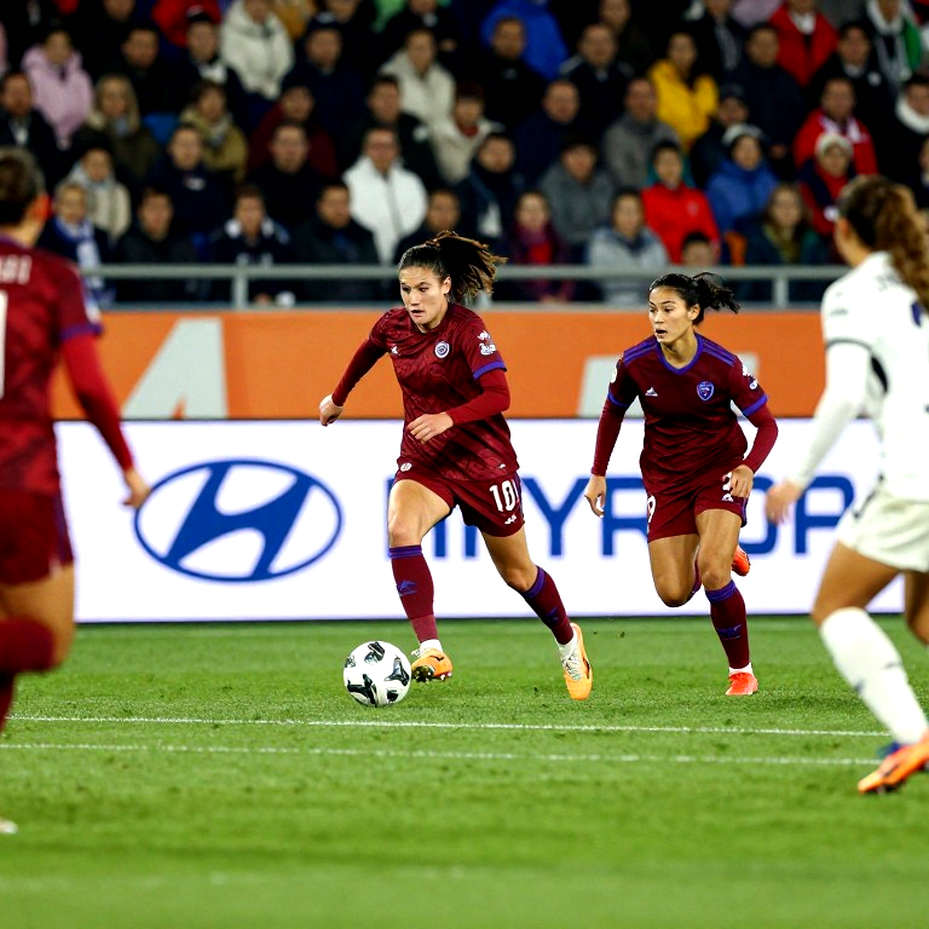
The decision to rule Courtois out was almost certainly taken at least 24 to 48 hours before kick-off, since the news broke pre-match. That means Lunin very likely took most of the week's reps with the first team. A week training behind the first-choice back four is the best available cure for rust — imperfect, but far better than being thrown on from the bench in the 20th minute.
Then there is the tactical side. The very fact that Real Madrid may have to play more conservatively could be the right approach for an away trip. Plenty of big sides lose at Camp Nou by insisting on playing their football where it is not permitted. A more direct, deeper, waiting Real Madrid is not a weaker team — it is a different one.
And there is a further layer, more important still: the original report names no source for any of its factual claims. No club statement, no press conference, no diagnosis. The only fully attributed material is Courtois' earlier quote and the broadcaster line. When a report makes room for “Ziggo Sport will show the full match” and “kick-off at 9pm”, that is usually the signature of affiliate content rather than investigative journalism. I am not saying the information is wrong. I am saying it is unverified — and a large headline resting on a thin factual base is the familiar recipe for manufactured panic.
The other side has its argument. If Real Madrid lose and Lunin errs, every mitigating word of mine becomes theory. Football is settled by results, and people will say the club failed to prepare an adequate second option. That is a fair criticism — but it is only correct after the result is known, and a criticism that is only correct after the result is known is not analysis.
What I take from this story is not a scoreline prediction. The signature ends the journey, but I live in the middle where nobody tells the story — and the middle here is a 27-year-old goalkeeper standing in a goal at Camp Nou, with zero minutes this season and an extension signed on the other side of the touchline.
If Lunin plays well, Real Madrid may win and it will be called character. If he plays badly, it will be called a coaching failure. And if Courtois returns next week and carries on as if nothing happened, the real question will still be sitting there, unanswered: when a club has two goalkeepers good enough to start and only one goal, what is the correct definition of stability?