
Sheffield 2026: World Hopes Week and the pipeline puzzle beneath the U12 fog
ITTF World Hopes Week 2026 sẽ diễn ra tại Sheffield (Anh) trong chưa đầy hai tuần nữa, với 40 tài năng U12 (20 nam, 20 nữ). ITTF trao quyền đăng cai lần thứ hai liên tiếp cho Table Tennis England. Joseph Sebatindira (Uganda) và Kaede Neya (Nhật Bản) thắng Challenge. Key facts: • ITTF tái bổ nhiệm Table Tennis England đăng cai World Hopes Week 2026 tại Sheffield sau phản hồi tích cực từ 2025. • 40 tay vợt U12 gồm 20 nam, 20 nữ; Eva Jeler và Magnus Mallander dẫn dắt khối tập 5 ngày. • Joseph Sebatindira (Uganda) và Kaede Neya (Nhật Bản) là hai người chiến thắng Challenge. • Dave Hembrough (Sheffield Hallam) phụ trách hội thảo sức mạnh; Butterfly tặng bàn thiết kế London 2026 cho chương trình giới thiệu hội viên. Nguồn: Table Tennis England, bài viết 'Back to the future – Sheffield set to welcome the world again' | Cross-checked: VuaBong.vn Q&A: Q: World Hopes Week có điểm xếp hạng WTT không? A: Không, đây là sự kiện phát triển tài năng, không nằm trong hệ thống điểm WTT. Q: Ai là HLV trưởng chương trình? A: Eva Jeler và Magnus Mallander, HLV trưởng của ITTF. Q: Sự kiện có liên quan gì đến London 2026? A: Chiếc bàn Butterfly thiết kế London 2026 gợi tín hiệu cho một sự kiện lớn tại London vào 2026, nhưng nguồn chưa xác nhận.
When no ranking system exists for players under 12, World Hopes Week 2026 in Sheffield has no WTT points, no prize money, and no ranking number to update. But for a data analyst like me, this is the clearest long-term pipeline signal in world table tennis this year.
A few days ago, the International Table Tennis Federation (ITTF) confirmed it had awarded the hosting rights for World Hopes Week 2026 to Table Tennis England in Sheffield for the second consecutive year, following positive feedback from the 2026 edition. The news sits inside a release titled 'Back to the future', but for me, going back to the future is not just about a venue. It is a signal about who is being trusted to build the bottom tier of the table tennis pyramid.
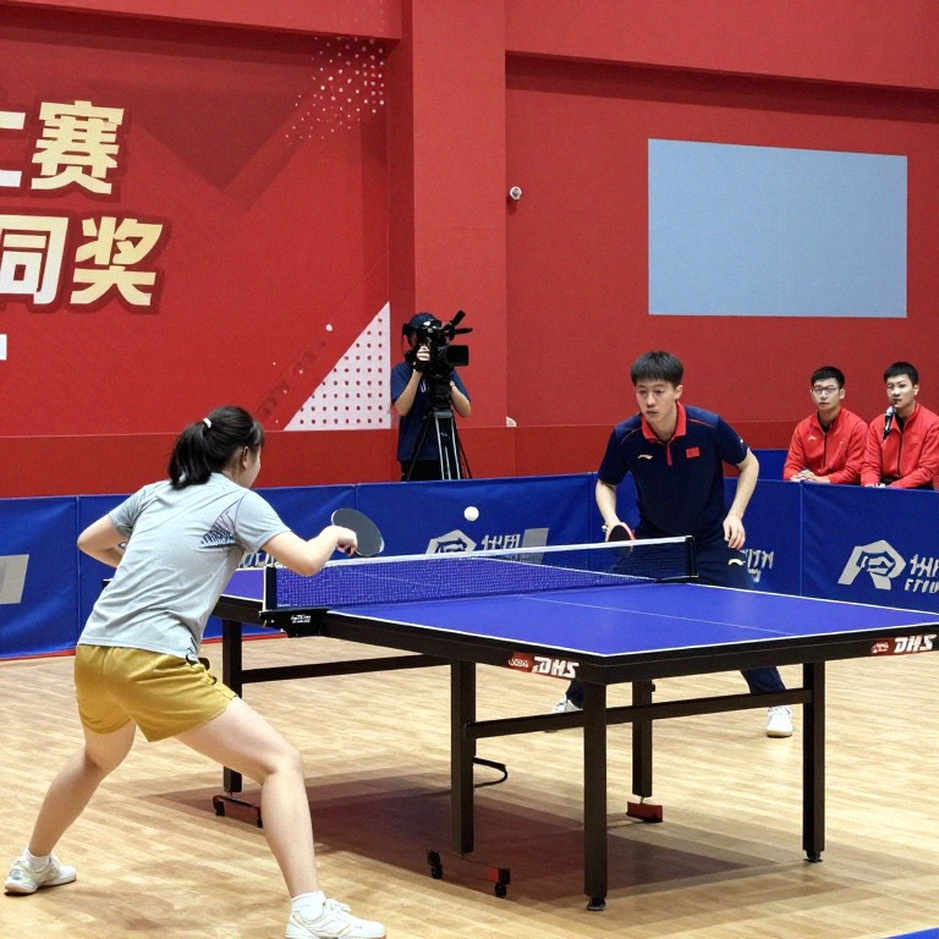
40 under-12 talents – 20 boys, 20 girls – and their coaches will gather in Sheffield in less than two weeks. ITTF Head Coaches Eva Jeler and Magnus Mallander will run the five-day training block. The Challenge competition closed the camp with two winning names: Joseph Sebatindira from Uganda and Kaede Neya from Japan. I have followed youth matches across Asia and Europe for years, and I know one thing: at this age, victory has signal value, not conclusion value.
Nine years ago, from a youth tournament in South Korea, I read five years of world football ahead. Today, World Hopes Week gives me a similar feeling, although the indicators are completely different. So how do I read this event? First, I discard all conventional match-analysis tools. The event is not part of the WTT ranking system, not part of the points cycle, and no prize fund has been published. This is a talent-development and player-identification camp. Its competitive value is close to zero, but its strategic value is medium-to-high. Numbers hide nothing; we just have not placed them in the right order. Arranged from the perspective of a transfer-market analyst, I see four signals.
The first signal is the re-award. ITTF development events are usually rotated between member associations. Having 2026 return to Sheffield after 2026 means Table Tennis England has not merely fulfilled the host role; they are being positioned as a reliable anchor for ITTF youth programmes. If this trend continues over several years, England will own a valuable soft asset: hosting rights for the world federation's development activities, with commercial and sports-diplomacy opportunities attached. What interests me is not Sheffield, but the question of who receives the 2027 event when the next announcement comes.
The second signal lies in the training content, and this is the most valuable part for me. The strength and conditioning workshop was delivered by Dave Hembrough from Sheffield Hallam University; a separate coaches' workshop focused on 'the physical determinants of success of the youth table tennis athlete'. For an under-12 group, introducing sports science at this stage is a strategic message. The world is shifting from the 'technique first, fitness later' model to a model of 'athletic foundation first, technique built on top'. Sheffield Hallam's presence is not decorative; they are embedding university knowledge into the youth training system. For me, this is a long-term investment that can produce sports-science dividends for England long after the camp ends.
The third signal is the coach-education architecture. The workshops were co-produced so that coaches could share experiences, insights, and philosophies. The 40 children are not the only output; coaches from the wider England talent network – Paul Johnson, Olly Tyndall, Eva Toth – were invited to experience the week for their own development. This is a dual knowledge-transfer model: half for athletes, half for coaches. I have seen similar models at European football academies, where a summer camp is actually an implicit staff training course. This approach is far more sustainable than spending money to buy a young star from abroad.
The fourth signal is the list of sparring partners: Zac Greenhough, Peadar Sheridan, Olly Cornish, Rebecca Savage, Jake Davidson, Rachael Iles. They are assets of the England youth system, deployed as training partners for international talents. When a national association uses its own young players to support an international camp, I understand that those names are in the priority development group. This is the kind of information a ranking list never shows. Over the next 12 to 24 months, if any of these six names appear in an England youth national team, I will not be surprised.
Then there is the commercial side, which is never absent from my articles. The Butterfly table with a London 2026-inspired design was offered as a prize in the membership referral programme, complete with the TTID code. This move turns a development event into a member-acquisition lever for Table Tennis England. Butterfly is planting a signal about a major London event in 2026 – likely the ITTF World Team Championships – and using World Hopes Week as a media ramp. That is how an equipment brand exploits the rhythm of a major-event cycle to activate its distribution channel.
Now comes the part I want to say directly. There is an easy reading that I refuse: turning World Hopes Week into a search for a 'golden generation'. The phrase 'the world's best under-12 players' in the release is marketing language, not a ranking description. There is no global U12 ranking, no points system, no head-to-head history large enough for conclusions. The winners from Uganda and Japan prove the programme has global reach, but they do not prove the conversion rate into elite talent. The history of Hopes Week editions shows that most participants never reach the world top 50 as seniors. Victory at age 11 and major titles at age 25 have a very weak correlation. I find no causal evidence here. If anyone uses this data to declare that a golden generation is rising, I would ask: where is the intermediate data chain?
The next blind spot lies in the silence. The release does not mention any Chinese representative among the winners or among the 40 participants. An absence proves nothing, but it is consistent with China's strategy of running a parallel domestic youth pipeline rather than depending on ITTF camps. From a China-vs-the-world standpoint, this source provides no data to analyse, and I will not invent a story to fill the gap. What is more worth noting is that the Japanese and Ugandan names represent Asia and Africa – two regions gradually broadening the sport's global competitive base. But that is only one data point.
I also do not call this a crisis. When the market panics, only indicators can keep the heartbeat. But conversion risk is real: a programme investing in children without longitudinal tracking becomes a 'feel-good' event. I have seen too many prestigious summer camps produce beautiful videos, then disappear from the selection map. Tracking data over the next 24 to 48 months – the rate of participants reaching national youth teams, number of international matches, U15/U18 ranking progression – would be the real measure of return on investment. Without such a tracking table, all we have is a week-long festival.
Leaving Sheffield, I will not take home a future champion. I will take home a watchlist: Joseph Sebatindira, Kaede Neya, the six English sparring partners, the coaches who sat with Eva Jeler and Magnus Mallander, and the London 2026 Butterfly table. Over the next 24 to 48 months, if these names appear at U15 or U18 events with supporting data, we can say the programme is beginning to generate returns. If not, the pipeline question remains open. Football never follows emotion, but it always follows probability. Table tennis is the same. And the probability of a system is measured by the number of people who pass through it, not by the titles promised in an opening speech.

Cầu thủ liên quan
Bài đề xuất
Vietnamese Table Tennis: The Two-Degree Wrist Gap2026-10-11
Annual Presentation Evening of the Isle of Wight Table Tennis Association: 16 Teenagers as a Positive Sign for the Future Development2026-09-08
Cleveland Cadet & Junior 4* 2026: The Draw Sheet That Exposes England's Silent Table Tennis Talent Machine2026-09-25
World Hopes Week in Sheffield: 40 Children, One Week of Training, and the Rest of Their Lives2026-09-28
Nick Jarvis named Archway Peterborough head coach: 250 England caps and an academy still waiting for rain2026-09-14
Antibes: Tolmacheva's Six Unbeaten Matches and the Deciders That Shaped the Standings2026-10-04
Two Points Apart and the Gap Behind It: Moyland and Zhang Edge Egypt at China Smash 20262026-10-08
Bài đề xuất
VBCL Returns to Derby Arena: Countback Decides the Women's Title and the Stratigraphic Map of English Veteran Table Tennis2026-10-02
World Table Tennis After Paris 2026: China Still Dominates, but Data Shows Where the Gap Is Narrowing2026-10-10
Ljubljana 2026: The 28 September Deadline and a European Games Ticket Hidden Behind the Mixed Doubles2026-09-13
Manav Thakkar and Manush Shah exit WTT Champions Macao in first round: Cold shower or strategic move before 2026 Asian Games?2026-09-10
Forty Under-12 Players in Sheffield and the Test of World Table Tennis's Pyramid Base2026-10-01
Bài đề xuất
Sheffield and the U12 Excavation: Inside ITTF World Hopes Week 20262026-10-01
Antibes 2026: Tolmacheva Wins Europe U15 Girls Title After Three-Way Race on 8-12026-10-05
Belgium Open 2026: Portugal's U21 Double and the Nameless Wall at the Senior Threshold2026-09-20
Seventy-Six Unprinted Pages, One Venue in Sheffield, and English Table Tennis Looking in the Mirror Before London 20262026-09-11
Ljubljana 2026: The 28 September Deadline and a European Games Ticket Hidden Behind the Mixed Doubles2026-09-13
The 2026 European Table Tennis Broadcast Map: When a Continent Reprices Itself2026-10-11
VBCL Returns: When a Title Is Decided by a Single Point and Champions Become Prey2026-10-01